
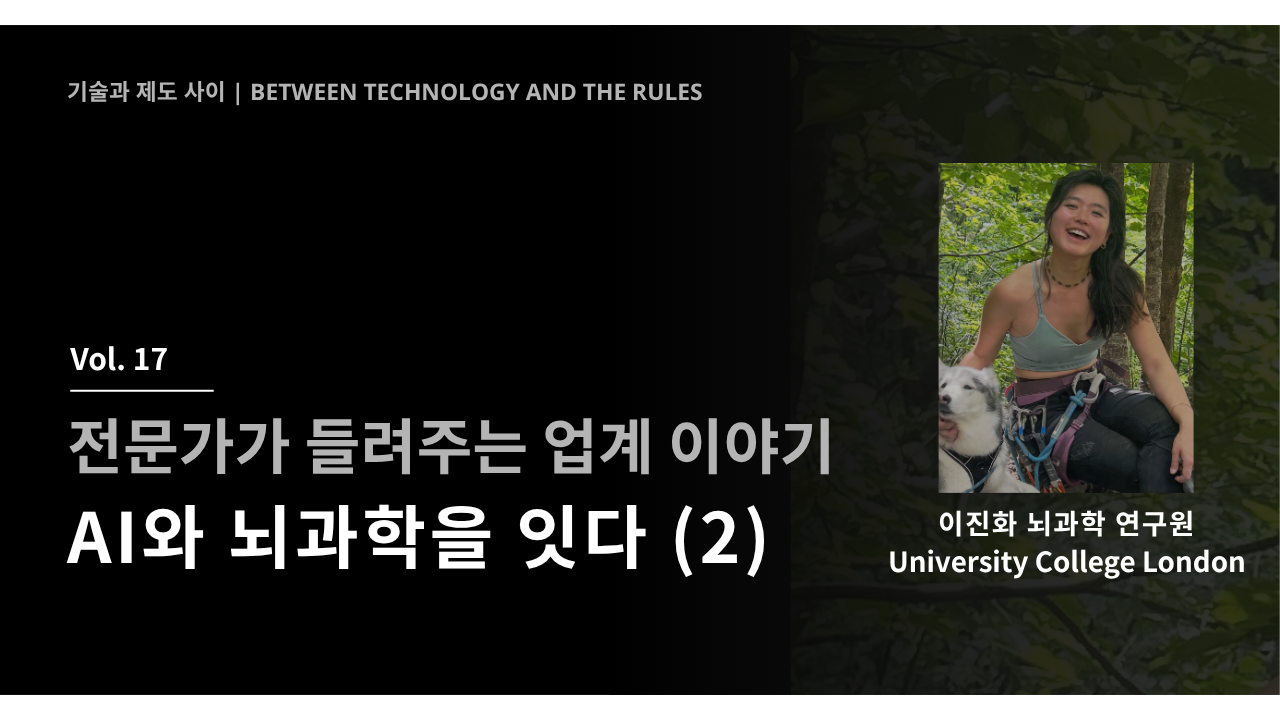
*This article was co-written with Jin Hwa Lee , a researcher working in Professor Saxe's lab (The Thinking Lab, University College London) and the author of the paper.
In the last episode, we talked about how the learning dynamics of AI were solved with equations, and the phenomena that cognitive science had observed for decades were consistently explained.
In this episode, we will find out what impact this paper had on each field. At the end, we included a Q&A with co-author, researcher Jinhwa Lee.
🔬 Neuroscience: From observation to calculation/prediction
The mere integration of separately established experiments and theories, such as Piaget's stage theory and the order of category learning, into a single principle is already a tremendous achievement.
Another achievement of this paper is that it gives quantitative analysis and predictive power to cognitive science. Previous cognitive science was limited to interpreting phenomena that had already occurred after the fact. However, now there is the possibility to calculate in advance which phenomenon will occur under what conditions based on the formula and to know which variables to adjust.
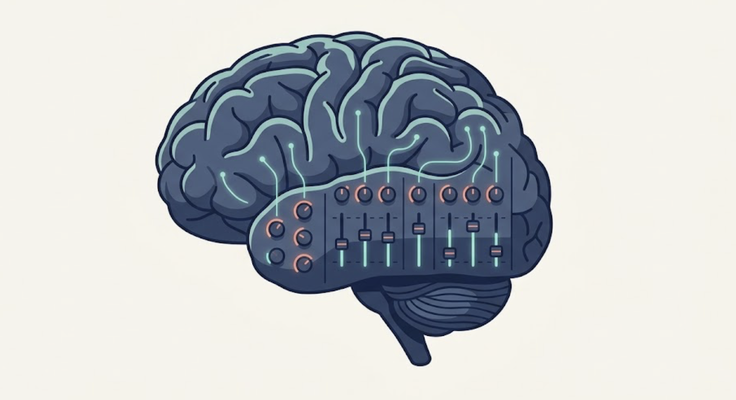
🤖 AI: Adding explanations to result-oriented development
The paper provided an answer to the ‘why’ that the AI field usually lacks.
Knowing ‘why’ is not simply a matter of intellectual satisfaction. If you don't know why something works, you can't predict when it will fail, and you can't design how to improve it. This is also the reason why AI development so far has largely relied on trial and error.
In particular, this paper explains why deep networks perform better than shallow networks. Because it turns out that only in deep networks does all of the learning aspects described in the previous article occur.
⚖️ Innate theory vs empiricism
This paper rekindles the debate on the ‘innateness of intelligence’, a rare problem in cognitive science. In other words, it is about “Are humans born with a blank slate (tabula rasa)?”
Innate theory is the claim that human cognitive structure, or the way we organize concepts and categories, is embedded in the brain at birth. In fact, children acquire language and concepts surprisingly quickly and with an efficiency that cannot be explained by experience alone.
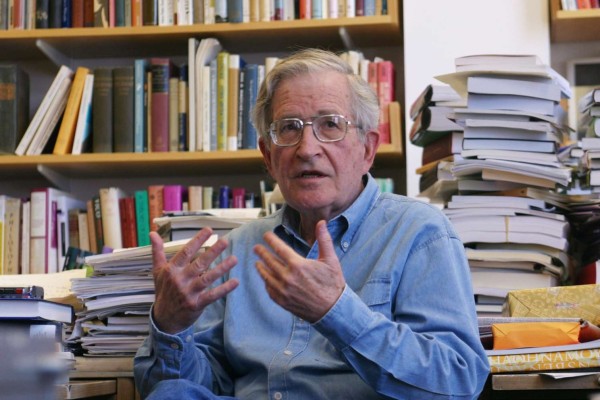
Chomsky, a representative of innate theory, applied this to language acquisition and said that it is impossible to explain through experience alone how a child acquires correct grammar with only incomplete input. This means that the brain has an innate language acquisition device.
On the other hand, empiricism holds that our brains are a blank slate at birth, and all structures emerge from experience. However, for a long time, empiricism remained at the level of simulation, “It works that way,” and it was not easy to refute Chomsky’s argument.
This paper provides a strong mathematical basis for empiricism. Even starting from a completely blank slate of random weights, hierarchical categories, typicality, and inductive biases emerge spontaneously, as long as the statistical structure of the environment and gradient descent are required. The phenomena that Chomsky said cannot be explained through experience alone can be easily achieved through the mathematics of learning.
However, this paper does not unconditionally support empiricism. Learning is based on experience, but requires certain 'structure' (e.g. deep neural networks, small initial weights) for learning to occur in the manner described above. Rather than simply saying that either innate theory or empiricism is right or wrong, it points to a more accurate nuance in between.
🧭 In conclusion
Following this paper, a 2019 Nature Neuroscience paper by Richards, Lillicrap, Ganguli, Saxe, and others proposed a framework to systematically connect neuroscience discoveries to AI design. Neuroscience and AI are beginning to truly connect with each other.
Personally, what was most impressive about this paper was that mathematics provided some answers to fundamental human questions, such as the debate between innateism and empiricism. If mathematics explains the development of concepts and categories, can it also explain emotions, creativity, and consciousness? If the way I understand the world and the concepts I currently have are a combination of the environment I have lived in and mathematical inevitability, then the person I am may be the result of some kind of math.
Also, if the way the AI learned the language and the way I learned the language follow the same mathematical principles, can we say that the AI also truly understands the language? Furthermore, can AI be viewed as just a tool? I think this is an important question that holds the key to how to define the relationship between AI and humans.
🎤 Ask the researcher
Researcher Jinhwa Lee, who co-wrote this series, is a doctoral student in the lab of paper author Andrew Saxe. To conclude the article, I asked a few questions.
Q1. How do brain science researchers accept this mathematical approach? Do you feel like you've gained predictive power, or do you think it's an oversimplification?
Although it is clearly a 'simplification', many people seem to be satisfied with the clarity of the mechanism that this approach provides. When we go beyond observation of a phenomenon (neural networks can learn this, they go through a learning process similar to that of real humans) and find out how certain elements of a neural network produce such a phenomenon, our understanding becomes completely different. The importance of these physical and mathematical approaches seems to be increasing, not only in brain science but also in AI in general. One way is to follow intuition or conduct repeated experiments by changing experimental variables to find new and useful phenomena, but wouldn't it be possible to formulate more precise hypotheses and plan experiments to confirm them based on this deep understanding?
Q2. I understand that your undergraduate degree was in physics. How did you start researching brain science? I’m curious about how you first became interested.
I majored in physics as an undergraduate because I admired the methodology of physics, but in fact, what I was always curious about and wanted to know more about was brain cognitive science and life phenomena. When I took the DNA dogma class while learning general biology, I still remember the feeling of surprise as I wondered how such a complex mechanism was created through evolution. On the other hand, although phenomenology has been studied a lot in brain cognitive science, I felt that the mechanism, just as we understand DNA, is not yet known. So, I started with the vague idea that I wanted to study the brain like that.
Q3. What kind of research are you doing these days?
The question I've been most interested in in recent years is how neural networks learn systematic generalizations. Systematic generalization refers to learning a concept or rule from a limited number of examples and applying this to new information or examples. Language is the most common example. For example, as children, we read and hear a limited number of sentences, but at some point, we understand the grammar of the language and how different words are used, and are able to understand and create new sentences that we have never heard before. If you think about it, it's so obvious, but in fact, it's not completely known how this is learned and implemented in a neural network. Understanding it better is currently the main research focus.
Q4. Recently, there has been a lot of discussion about whether AI might be conscious. What are the academic atmosphere and your thoughts on this?
I don't think we know too much yet to discuss pros or cons. Personally, I feel that this is similar to the early days of neural networks, when phenomenological studies were mainly conducted on what they could do without a good understanding of their principles. In order to know this scientifically, shouldn't we first agree on an objective definition of what 'consciousness' is and be supported by systematic experiments and understanding to see if AI follows its properties?
I would like to thank researcher Jinhwa Lee for taking time out of her busy research schedule to help me write the article and answer my questions. Thanks to you, I was able to hear the story beyond the paper.
‘Industry stories told by experts’ continues. Anyone from any field is welcome to talk about hot issues in the field they are currently working in. Please contact us through comments or messages.
#Technical task diagram #AI #Brain science #Cognitive science #Deep learning #Paper introduction