
In the last two episodes, we talked about papers linking AI and brain science. Now that we've talked about brain science, we decided to look into patent trends in that field.
The editorial “Patent Highlights at the Frontier of Neuroscience: From Molecular Targets to Psychedelic Neurotherapeutics,” published by ACS Medicinal Chemistry Letters in December of last year, is an article that analyzes the flow of over 40 neuroscience patent highlights covered by the journal.
The sixth topic of ‘The World Seen Through Patents’ is brain science. I have summarized the main points of this editorial by dividing them into three streams.
🧱 First Stream - Blood Brain Barrier (BBB), from barrier to design condition
The first is the blood-brain barrier (BBB).
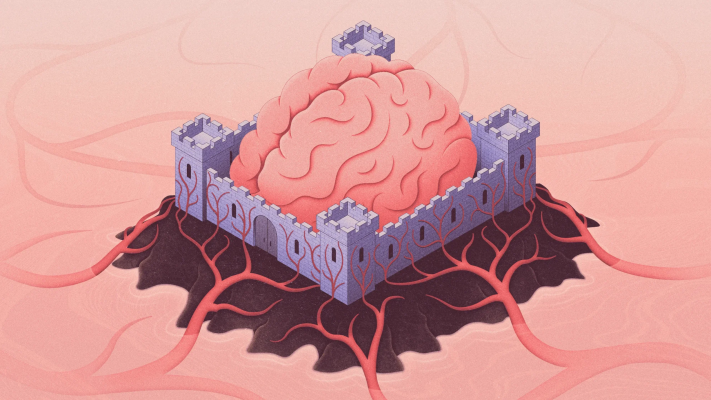
The brain is the most protected organ in our body. Between blood vessels and the brain, there is a checkpoint called BBB, which blocks most molecules traveling through the blood. Therefore, even if effective drugs were created, they often failed to reach the brain, which was the biggest challenge in developing neurotherapeutics.
Previously, “finding an effective drug molecule” and “how to get the drug molecule to pass through the BBB” were done separately, but recently the approach has changed. They began to view BBB as “a condition that should be reflected in the design from the beginning.” The authors of the editorial describe this as “converting pharmacokinetic limitations into molecular opportunities.”
The biggest change that occurred because of this transition was that the boundary between diagnosis and treatment disappeared. Once it became possible to "design" molecules that pass through the BBB, it became possible to create "tracers that image what is happening inside the brain" using the same principle. It has become possible to track abnormal proteins (α-synuclein) accumulating in the brains of Parkinson's disease patients while they are alive, or to observe the progression of Huntington's disease in real time.
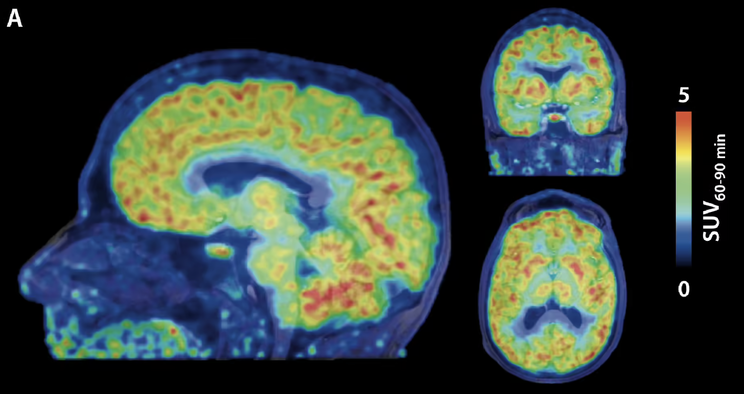
Diagnostic technologies are being developed rapidly based on this approach. Imaging technology, which initially observed receptors on the surface of brain cells, now looks into the signaling networks inside the cells. Things that were previously invisible, such as the tau protein in Alzheimer's or the molecular switches in neuroinflammation, are starting to become visible.
The editorial says that the field of neuroscience is now moving from ‘mechanisms’ to ‘visualization’. We are moving from a method of checking drug efficacy results after the fact to a method of visualizing and adjusting the drug action process itself in real time.
In other words, one molecule functions as both a diagnostic tool and a therapeutic agent at the same time. This is also interesting from an IP perspective, as it may become unclear whether inventions related to these molecules should be viewed as pharmaceutical patents, diagnostic/imaging patents, or recognized as a new category encompassing both.
🔁 Second wave - AI enters medicine
The second is an AI integrated neurotherapeutic agent.
The editorial uses the term “AI-driven behavioral pharmacology.” It refers to a new paradigm in which drug design (in silico), biological response observation (in vivo), and mental state control (in mind) are integrated into one data flow. This means that the boundaries between pharmacology and informatics are blurring.
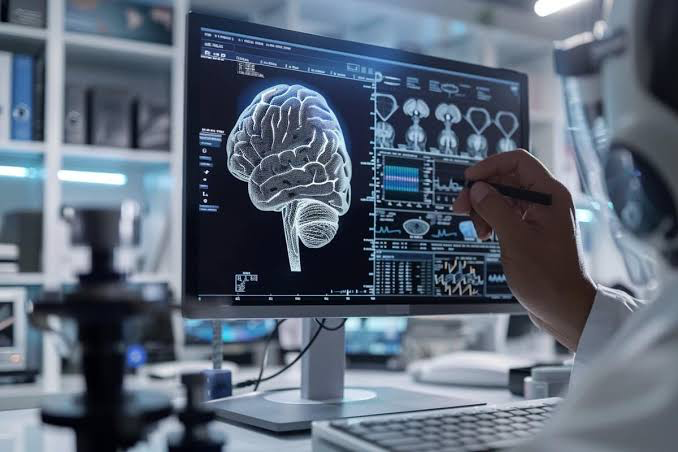
According to the editorial, this flow largely consists of three stages.
First, there are brain monitoring devices and stimulation interfaces that track neural activity in real time. By adding AI-based behavioral and pharmacological modeling, a closed-loop structure is formed that automatically adjusts the dose and effect by analyzing psychedelic and neuroactive drug responses as data. It is a dynamic form of treatment where the system measures response and makes next decisions at the time the patient takes the medication. Finally, it is a framework where machine learning algorithms interface directly with neural dynamics to personalize treatment.
The editorial describes the overall trend of the field as “a convergence of chemistry, computation, and cognition.” Molecular precision, system intelligence and patient experience are integrated into one dynamic feedback system.
Now that AI has been introduced, it is expected that pharmaceutical patent law will no longer be a drug-only law. The treatment becomes a dynamic system that receives patient data and makes different decisions at every moment, and the drug molecule is just one component of that system. Then, claims that center on molecular structure and medical use are not enough. Product claims, method claims, and system claims are all required, and each claim covers a different aspect of infringement.
🧬 Third Stream - Neuroplasticity, aimed at ‘brain adaptability’
The third is psychedelics and neuroplasticity.

Classic psychedelic substances like psilocybin and DMT have long been more regulated than therapeutic. A recent patent re-engineers these molecules into precise, fast-acting therapeutics. Psilocybin analogues are used to treat phantom pain, DMT and beta-blockers are administered together to reduce cardiovascular side effects, and 5-HT2A agonists without hallucinogenic effects are used to target depression and anxiety. There are also patents on injection and nasal spray formulations that provide rapid antidepressant effects.
These patents have something in common. The idea is that these drugs target neuroplasticity, or the brain's ability to change its own connections, rather than a specific receptor. Psychedelics are drugs that keep the brain's plasticity open for a while, and while it's open, neural circuits can rewire (which is why the editorial calls neuroplasticity a "druggable state"). In other words, psychedelics are “not just drugs, but an adaptive circuit repair platform.”
Usually, a drug target targets a single protein such as a receptor or enzyme, but in this case, the state of the brain itself is the target. The frame changes from treatment that suppresses specific symptoms to treatment that regulates the plasticity state of the brain.
🇰🇷 What about Korea?
So how does the system accept a treatment that combines drugs and software? Let’s look at the case of Korea.
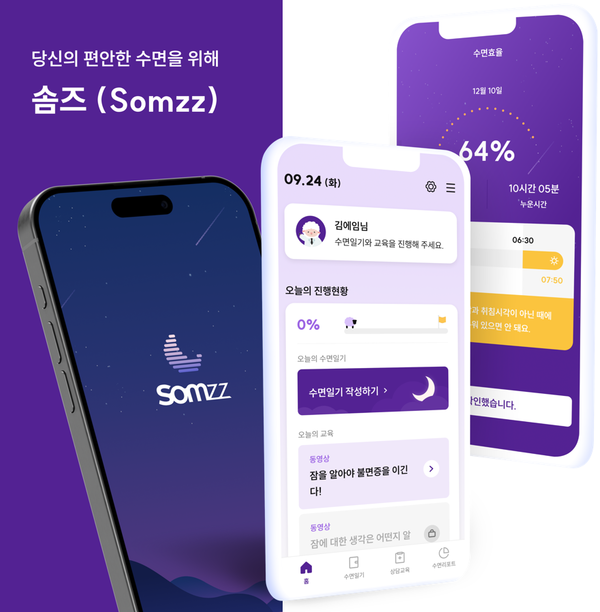
Digital therapeutic devices are reviewed as stand-alone software medical devices, not as drugs, in accordance with the “Digital Therapeutic Device Approval and Review Guidelines.” Drugs and software are viewed as separate categories. In February 2023, the Ministry of Food and Drug Safety approved AimMed's insomnia cognitive therapy software 'Somzz' as Korea's first digital therapy device.
The Digital Medical Products Act, which came into effect in January 2025, goes one step further. This law divides digital medical products into three categories: digital medical devices, digital convergence medicines, and digital medical/health support devices. Among them, ‘digital convergence medicines’ refers to a combination of medicines and digital medical devices (Article 2, Paragraph 3).
Article 2, Paragraph 3: “Digital convergence medicine” refers to a medicine that combines medicines (including advanced biopharmaceuticals) and digital medical devices or digital medical/health support devices pursuant to Article 2, Paragraph 4 of the Pharmaceutical Affairs Act. However, cases where the main function corresponds to a digital medical device are excluded.
However, the entire combination is not a new category. As the article states, digital convergence medicines are classified as ‘drugs’ and matters not covered by this law are subject to the Pharmaceutical Affairs Act (Article 5). However, if software is the main function, it is passed over to digital medical devices.
On the other hand, in the patent world, there is not even this category yet. Compounds must be filed as material patents, devices must be filed as device patents, and algorithms must be filed as method patents. To cover all three, a separate system claim must be filed.
Here is another situation unique to Korea. Since methods for treating people are not patentable because they are considered inventions that cannot be used industrially, it is difficult to claim them as a treatment method by including the key closed-loop step of “measuring brain response and determining the next dose.” Although there is an open way to view administration method/dose as an element of medicinal use, it is still controversial because this usually assumes a pre-determined dose and does not take into account the dose that varies from moment to moment for each patient.
🧭 Wrapping Up
The editorial organizes the evolution of neuroscience patents into a single trajectory. Controlling neuroinflammation, targeting neurodegenerative diseases, molecular imaging, psychedelic re-engineering, and AI integration are all moving toward “enzyme-unit regulation → receptor restoration” and, to a larger extent, “molecule alone → integrated system.” The editorial labels this new field “Convergent Neurotherapeutics.”
Even in this trend, medicinal chemistry is not disappearing. The editorial calls medicinal chemistry a “structural backbone” and believes that chemical precision will remain the foundation and AI analysis will combine on top of it to evolve into “adaptive therapeutics.” In the future, new types of treatments based on medicinal chemistry and combined with other fields are expected to become mainstream.
From an IP perspective, changes in claims are expected to be noticeable. This is because we will move from charging for the structure and use of a single molecule to charging for the entire system that combines molecules, algorithms, devices, and patient data. Since drug manufacturers, device manufacturers, and algorithm developers may infringe on different claims, how the scope of protection and standards for judging infringement will change will likely be a key issue in the neurotherapeutics industry in the future.
The ‘World Seen Through Patents’ series will continue to visit irregularly.
#Technological task diagram #World seen through patents #Brain science #Nerve therapy #Digital therapy device #Patent