

When studying AI, there are questions that naturally come to mind:
If we understand our brain well, can we also understand AI better? Conversely, if we understand AI well, can we also understand the brain well? No, before that, are they even similar in the first place?
This question is trickier than you think, and no one has an easy answer.
Then, in 2019, a paper published in PNAS made a breakthrough. Saxe et al., “A Mathematical Theory of Semantic Development in Deep Neural Networks” (PNAS, 2019).
This article was co-written with the paper's author, Jin Hwa Lee, who is working in Professor Saxe's lab (The Thinking Lab, University College London).
🧠 Near and far, brain science and AI
From the 1940s to the 1980s, scientists showed that a neural network modeled after the brain's operating structure could be the basis for AI.
In the 1940s, McCulloch and Pitts put the workings of neurons into a mathematical equation. Then, in the 1980s, Rumelhart and McClelland proposed the PDP (parallel distributed processing) model. The idea was that just as neurons in the brain are connected to each other and operate in parallel, an artificial neural network could be designed that way. This is the first time that it has been shown that 'intelligence' can be learned using a structure that mimics the brain. This became the direct starting point for today's deep learning.
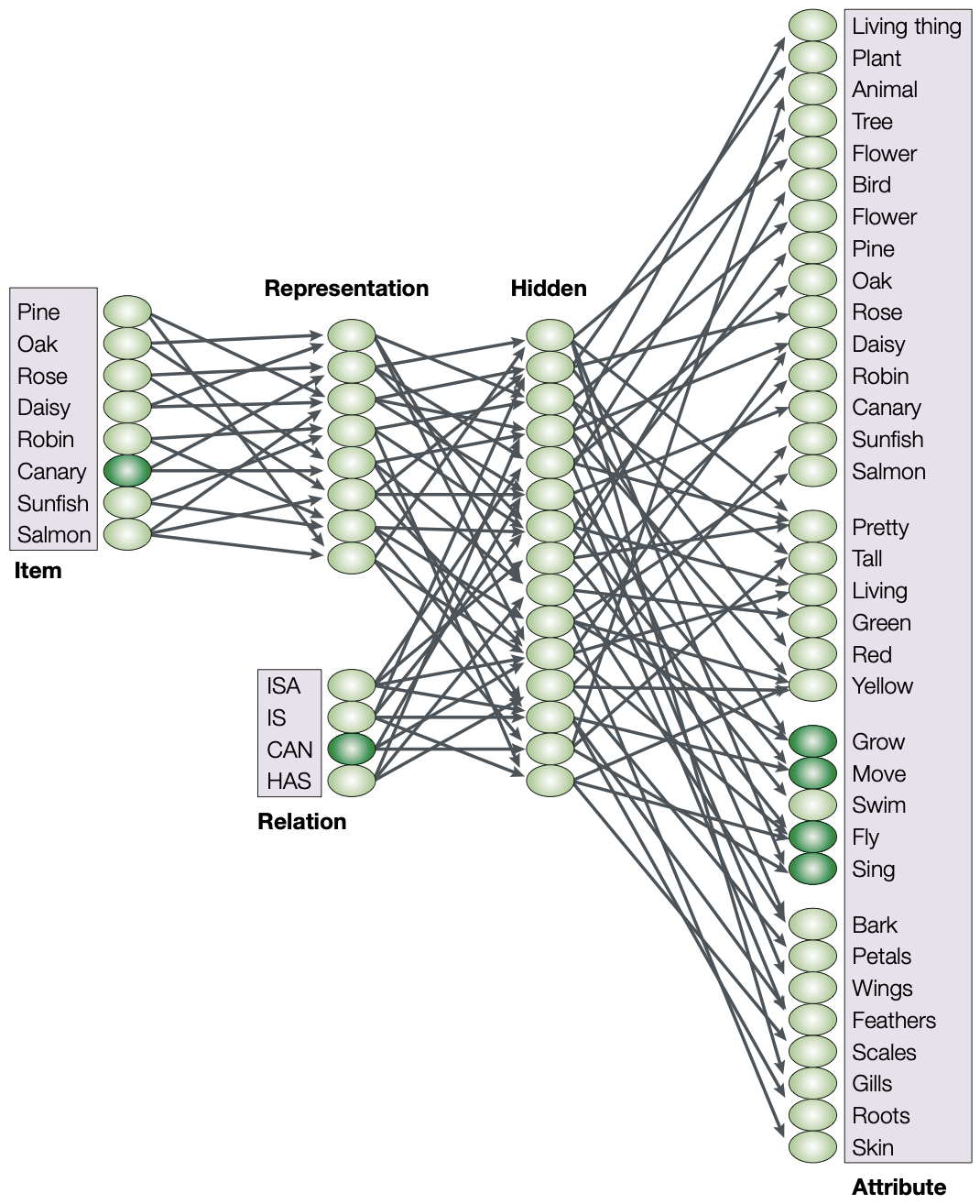
But over time, the two fields became increasingly distant.
Neuroscience has delved deeply into actual neural circuits. It goes deep biologically, with the hippocampus creating memories, the amygdala processing fear, and dopamine orchestrating reward learning.
AI has developed based solely on performance. Transformers came out, and then the giant language model came out. The original goal of imitating neurons suddenly fell by the wayside.
To summarize the difference between the two, it is as follows.
Neuroscience speaks the language of observation:
These are all elaborately accumulated observation results, but it is impossible to calculate why they are that way or how they will change if the conditions are changed.
AI speaks the language of trial and error:
Try changing it, check the results, and change it again. We know what works, but we don't know why it works.
Then, after the deep learning boom in the 2010s, the relationship between AI and brain science was reexamined. In fact, some interesting similarities are starting to emerge between the two. Research has shown that deep learning models that learn images show hierarchical activity patterns similar to the brain's visual cortex (Yamins & DiCarlo, 2014), raising expectations that the two fields can help understand each other.
However, contrary to expectations, there was no significant progress in mutual understanding. Although similarities were observed, why such connections occurred was still not clearly explained, and the conversation between the two fields mainly remained at the level of analogy. This is because the languages used in the two fields are different.
To bridge this gap, a third language was needed that both fields could share.
💡 Strategy chosen by the paper: intentionally simple
Saxe's paper published in PNAS in 2019 showed that changes seen in the development of our cognition can be predicted by explaining the neural network-based AI learning process with a formula. The language that could explain the principles of how the two systems work was mathematics.
Simplification can obscure details, but it can also be the most powerful weapon in revealing the essence of a system. The ideal gas law in physics does not completely explain actual gases, but it accurately captures how gases made up of countless molecules change and move through a few key variables.
The authors initially did not intend to analyze real brains or state-of-the-art AI models. This is because both are too complex to be completely solved with formulas.
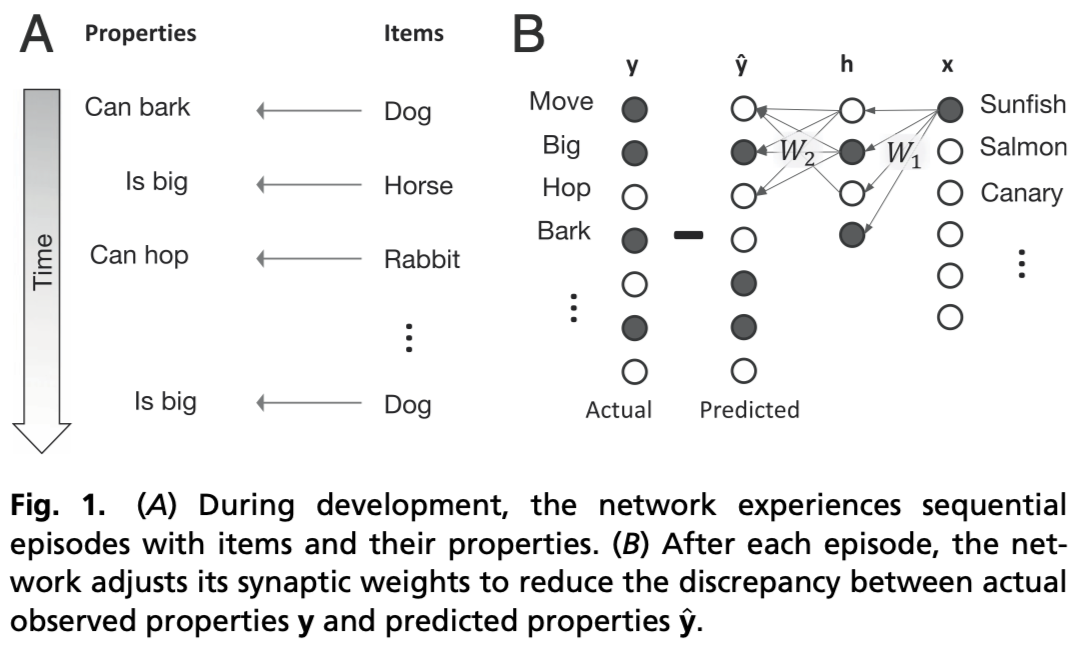
Instead, the authors chose a model called a deep linear network. This is a simple network with the non-linear activation function removed.
🗝️ Key point of the paper: Solving neural network learning with mathematics
The authors represent and solve differential equations for how weights change over time when training a deep linear neural network using gradient descent. In other words, the learning pattern of the neural network is tracked in real time.
By solving differential equations, like the ideal gas law in the previous example, the learning of a neural network consisting of tens of thousands of items could be briefly explained with a much smaller number of variables.
The results can be summarized as follows. Neural networks do not randomly learn patterns in data,
It is learned.
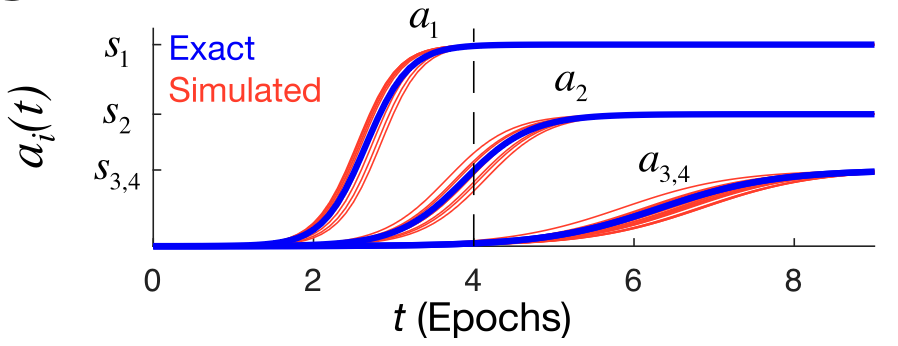
Here's a little more explanation on the importance of patterns.
If you have data consisting of animals and their characteristics, there are multiple hierarchies of patterns mixed within it. At this time, the pattern refers to the division that appears in the data, for example, “Bird or fish?”, “Pigeon or sparrow?” In this case, the hierarchy is divided into patterns that are strong throughout the data and are more important (“Bird or Fish?”), and less important patterns that appear only in a portion of the data (“Dove or Sparrow”).
Gradient descent captures patterns that appear strongly throughout the data first, and patterns that appear only in parts of the data later.
🔢 Explaining cognitive science with mathematics
The above results explain various phenomena that cognitive science has observed over the past several decades. Here are just a few of them.
① Learning large categories (“animals”) before small categories (“pigeons”)
Children understand larger categories before details. “Bird” comes before “pigeon,” “animal” comes before “bird,” and so on.
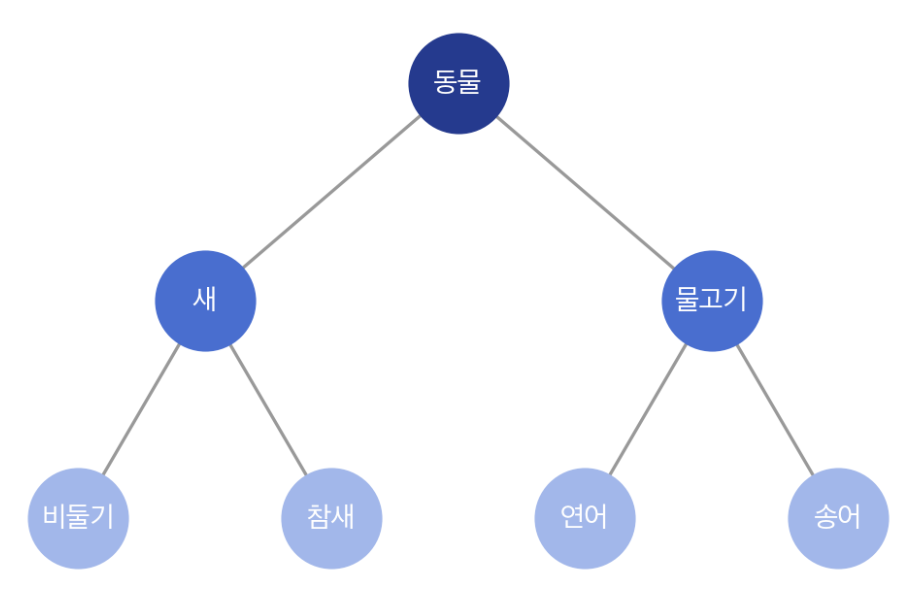
According to the formulas in the paper, this order of learning is a mathematical necessity.
② Piaget’s theory of cognitive development
Piaget said that child development is not continuous. Rather than improving little by little, the stage of sudden leap after a long period of stagnation is repeated.
The S-shaped curve derived from the formula fits this exactly. And since different patterns transition at different times, they look like “phases” from the outside.
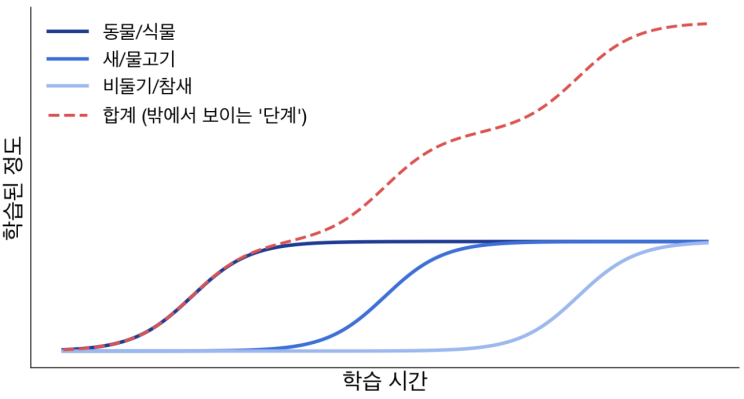
The stages of child development that Piaget derived from decades of observation of children are also a mathematical necessity of the learning algorithm.
③ U-shaped learning curve - Temporary errors in children's learning process
There are common learning patterns in children. This is the ‘once wrong and then corrected’ pattern. For example, to the question “Can salmon fly?”, the answer is “No” at the beginning of learning. But at some point, the answer is “yes” for a moment, and then it goes back to “no” later. This is common to all children. Why is that so?
Because patterns are learned in order of importance, there comes a point when children have learned broad distinctions (“is/isn’t an animal”) but not yet learned specific distinctions (“bird vs. fish”). In this state, if we learn a fact about the subdivision (“birds can fly”), the network, which still treats birds and fish as the same group, will apply the characteristics of birds to fish as well. Then, once detailed classification learning is completed, these errors disappear.
In other words, these transitional learning errors that we all experienced in childhood are also a mathematical necessity.
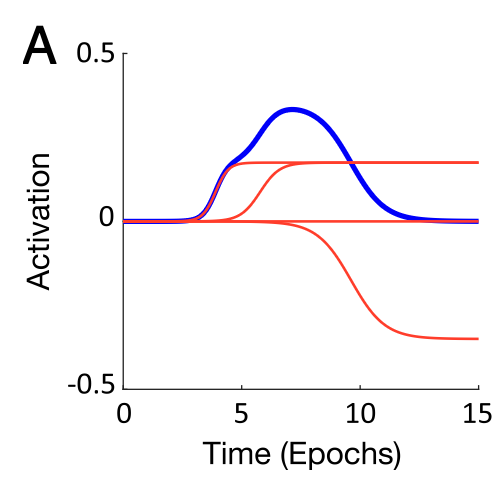
In summary, this paper derived all phenomena that had been explained by different psychologists, through different experiments, and through different theories, from formulas expressing the learning process of deep neural networks.
The authors describe these results as a "mathematically tractable window" into the process by which brain representations develop through experience, although this simple formula is not the brain itself. And I conclude the paper by saying that I hope that this window will one day serve as a stepping stone to reveal how high-dimensional calculations of the mind emerge from the biological hardware called the brain.
🧭 Wrapping Up
The story of this episode was that mathematics was the third language connecting brain science and AI, and that numerous cognitive science facts were explained at once from this.
In the next part, we will look at the contribution of this paper to each field of brain science and AI, and what answer it provides to the long-standing debate, “Are humans born with a blank slate?” I will also add a brief Q&A with researcher Lee Jin-hwa, co-author of this article.
#Technical task diagram #AI #Brain science #Cognitive science #Deep learning #Paper introduction