
I wrote this series with Jeonguk Kweon , currently an assistant professor in the Department of Chemistry at UNIST.
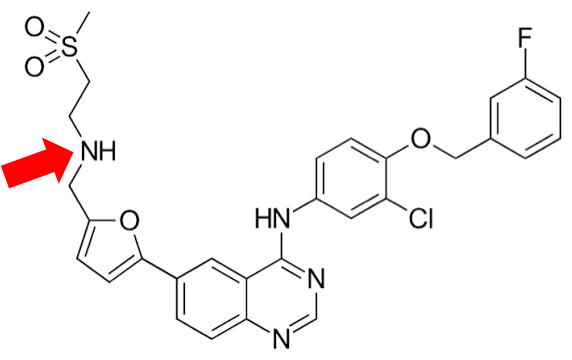
Drug researchers often make small changes to a drug molecule and compare how well the variants work. They might ask, for instance, “How would this compound’s activity change if we took out this nitrogen?”
The idea is simple, but putting it into practice is hard. Even to change a single atom, you may have to choose a different starting material and synthesize the whole molecule again from scratch. That is why synthesizing a molecule is often likened to building it up piece by piece. It is also one reason why making and discarding thousands of candidate molecules in drug development takes so much time and money.
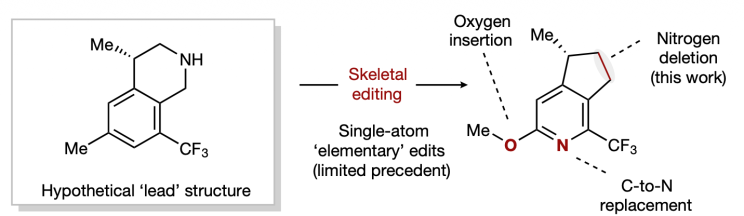
Recently, though, an approach called skeletal editing has attracted attention. It removes or inserts a single atom in an already complete molecule. Much as you might delete or insert a letter in a text, you edit the molecular framework one atom at a time.
📝 The idea of “editing” a molecule
Molecules are not Lego bricks. Looking at a structural formula, you might think you could snap whatever piece you wanted into exactly the right place. Real synthesis works differently.
Synthesizing a molecule involves countless operations that take pieces apart and join them together. When chemists want to join two pieces, what they actually do is more like putting the bricks most likely to stick together in a box and shaking it hard.
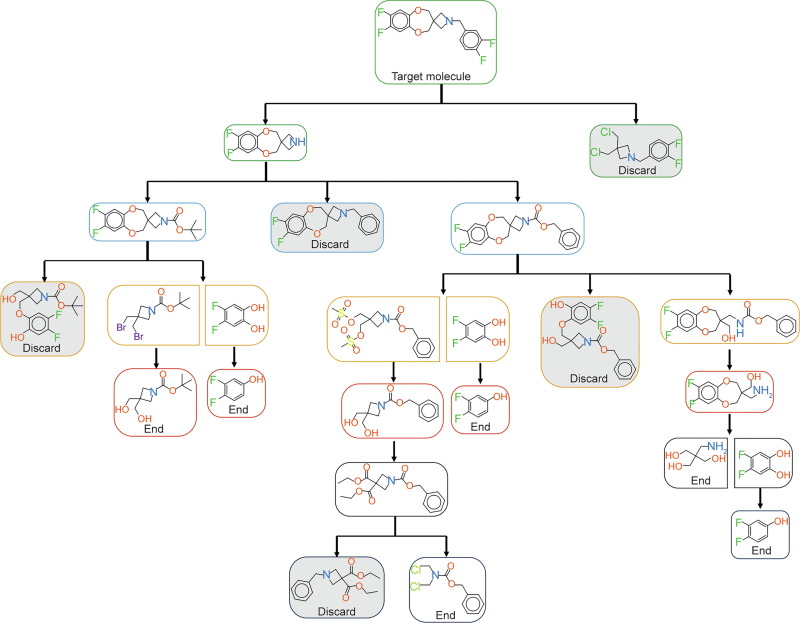
That is why making even one molecule requires a fairly elaborate blueprint. Chemistry’s basic design tool is retrosynthesis. You mentally take the target molecule apart and work backward to decide which bonds to disconnect and where to join the pieces.
Within this framework, chemists have already developed many ways to convert one functional group in a molecule into another. This is sometimes called peripheral editing. Removing or replacing a functional group in an existing drug is therefore a relatively straightforward strategy.
Skeletal editing, which changes the central framework itself, is much harder, and examples are rare. The carbon–carbon and carbon–nitrogen bonds in the framework are strong and hard to break. Reconnecting the pieces without damaging neighboring functional groups is harder still. Single-atom editing, adding or removing just one atom, is the simplest idea of all, yet very few reactions could actually do it in a single step.
➖ Subtraction in a molecule
– Deleting nitrogen from the central ring
In a paper published in Nature in May 2021, Mark Levin’s group at the University of Chicago described a reaction that removes just the nitrogen from a secondary amine, a common structure with a central nitrogen flanked by two carbons [1].
[1] Kennedy, Dherange, Berger & Levin, “Skeletal editing through direct nitrogen deletion of secondary amines”, Nature 593, 223–227 (2021).
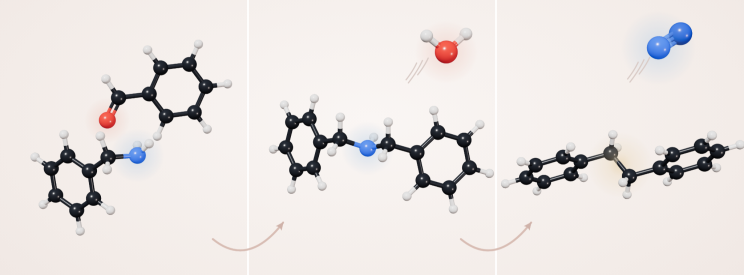
In this reaction, the nitrogen leaves the secondary amine as harmless nitrogen gas, and the two remaining carbons immediately form a new carbon–carbon bond. In short, carbon–nitrogen–carbon becomes carbon–carbon.
The key was a special molecule called an anomeric amide. Through refinement, it became a stable reagent that is easy to handle.
This reagent is easy to make on a gram scale and needs no laborious purification. Preparing this kind of intermediate used to take several steps involving carcinogens and toxic reagents such as mercury and lead. This reaction does it in one go with a single stable reagent. You really could call it a magic reagent.
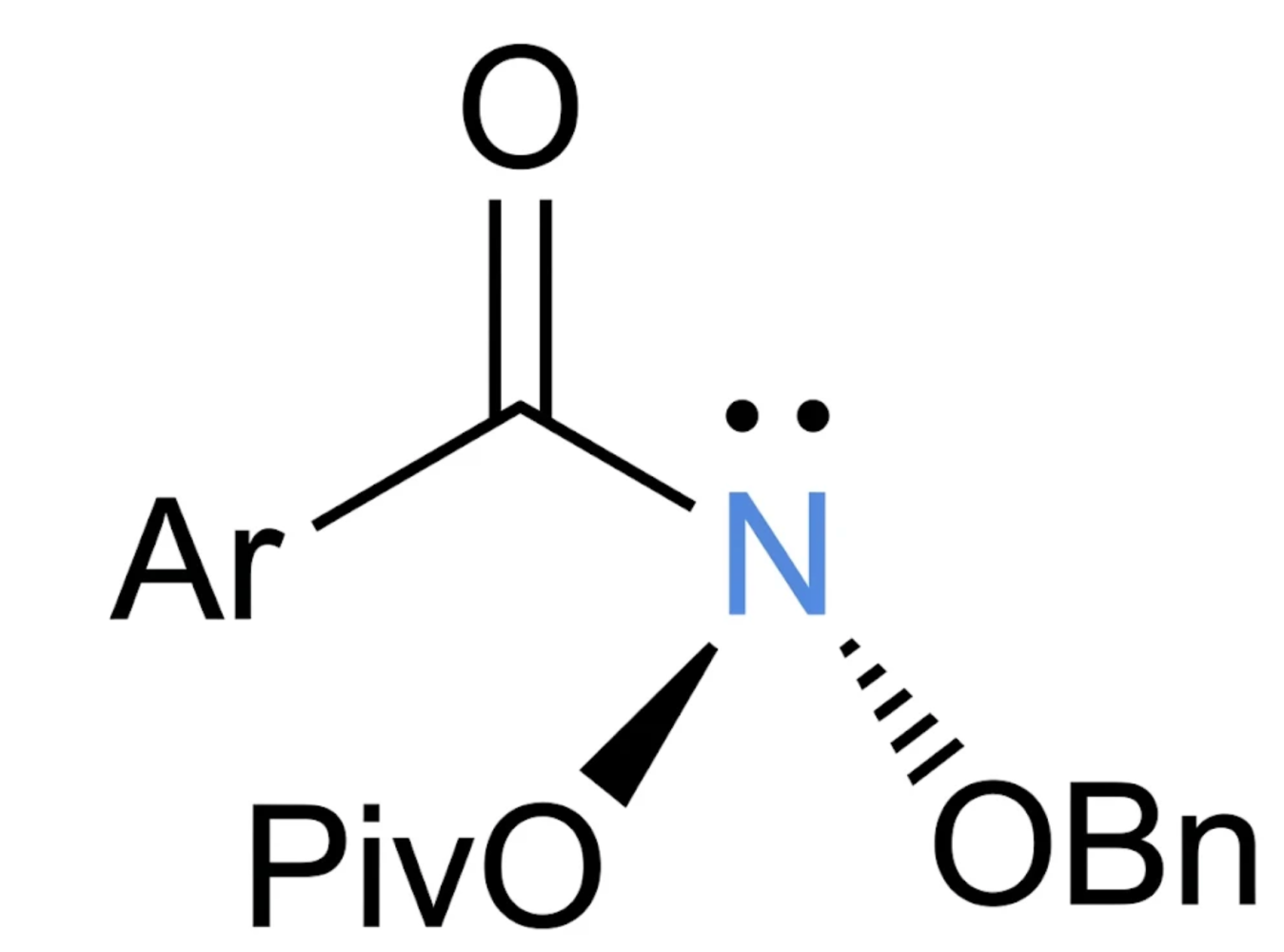
When the reagent meets the amine, a highly unstable intermediate called an isodiazene forms briefly. Its structure is designed to expel nitrogen. The moment the nitrogen leaves, the two remaining carbons lose their partners and become a pair of exceptionally reactive radicals.
What is interesting is that the two immediately join before they can drift apart. So instead of unrelated molecules mixing and matching, precisely the two carbons that were originally neighbors connect.
– Using nitrogen as a linchpin
Forming a new carbon–carbon bond at a particular site is among the trickier tasks in synthetic chemistry. Chemists use transition-metal-catalyzed cross-coupling reactions to form carbon–carbon bonds, but the approach still allows only a limited range of such bonds to be made.
Attaching something to nitrogen, by contrast, is so straightforward and dependable that it ranks among the most common reactions in drug development. Reductive amination, for example, consistently makes the top ten reactions used in drug research, and thousands of amine starting materials alone are commercially available.
This opens up a different strategy for making a carbon–carbon bond. First, use straightforward nitrogen chemistry, such as the reductive amination described above, to assemble two carbon fragments on either side of a nitrogen. Then remove the nitrogen to connect the carbon fragments directly. The nitrogen acts as a “traceless linchpin,” helping with assembly and then disappearing.
If the nitrogen was part of a ring, simply deleting it makes the ring one atom smaller, a process called ring contraction. This offers an easier route to small carbon rings that are hard to make directly.
The researchers used the reaction to make a precursor of the lung cancer drug pemetrexed (Alimta) and a synthetic intermediate for the marine natural product polysiphenol. They also made derivatives by removing nitrogen from lapatinib, mentioned at the outset, the nicotinic alkaloid anatabine, and tenilsetam. The yield of the lapatinib derivative, incidentally, was 42%.
🔓 The researchers’ choice
Before closing part one, there is one detail I cannot leave out.
The anomeric amide reagent used to remove nitrogen was indeed commercialized through Sigma-Aldrich. Yet the paper’s competing interests statement says that although commercialization was under way, the authors had no financial interest in it and had filed no patent application.
What is more, in a Chemistry World interview shortly after the paper appeared, Levin said he would gladly send the reagent to anyone who asked until it became commercially available. Today, Sigma-Aldrich and other reagent suppliers sell the same compound as “Levin’s reagent.” Chemistry World 인터뷰
They made a tool that opened up countless possibilities accessible to everyone.
To be continued in the next article.