
The fourth topic in “The world through patents” is space.
The European Patent Office (EPO) and European Space Policy Institute (ESPI), together with the European Space Agency (ESA), published a report titled Propulsion systems for space. It analyzes twenty years of space-propulsion patents from 2003 to 2022, covering 4,559 patent families filed at 52 patent offices by applicants from 43 countries.
There is a reason I chose propulsion among the many space technologies. Whether for launch vehicles, satellites, or in-orbit services, moving anything in space — or, before that, getting it into orbit — requires propulsion. It is a fundamental technology and an excellent indicator for mapping the landscape.
📈 Total applications
Space-propulsion patents grew at an average annual rate of 9% over the past twenty years, with particularly pronounced growth since 2011.
Actual launches increased over the same period. Annual satellite launches rose from around 300 to more than 2,800 in 2023. The market is also projected to grow as much as threefold by 2030 from approximately EUR 9.2 billion in 2022.
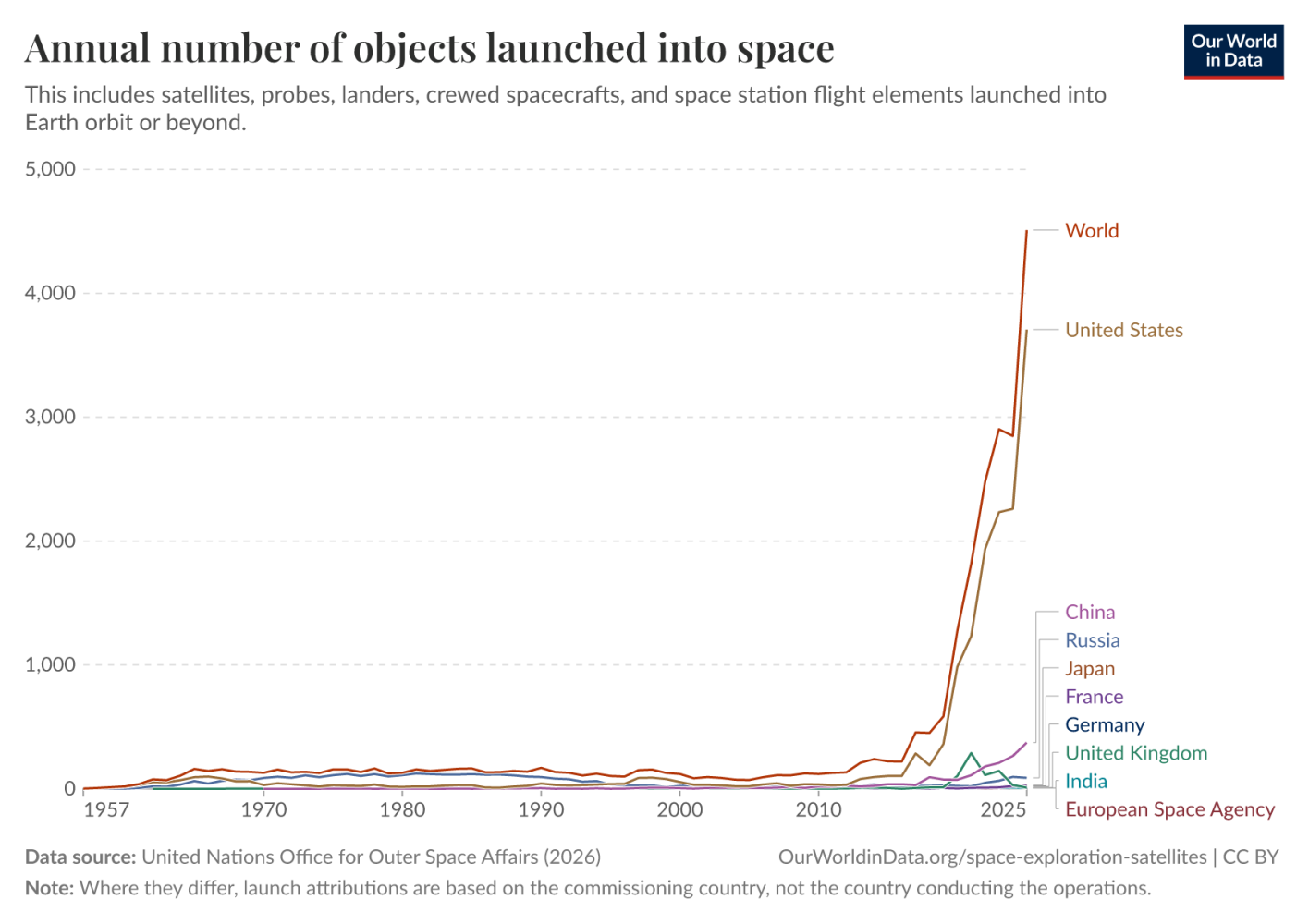
The parallel increase in launches and patents means this field has moved beyond laboratory experiments and already become a market.
🌏 National filing patterns
The national landscape resembles what we saw in the earlier installment on global IP in numbers. China is overwhelmingly ahead in volume, accounting for 38% of cumulative patents and 65% in 2022 alone.
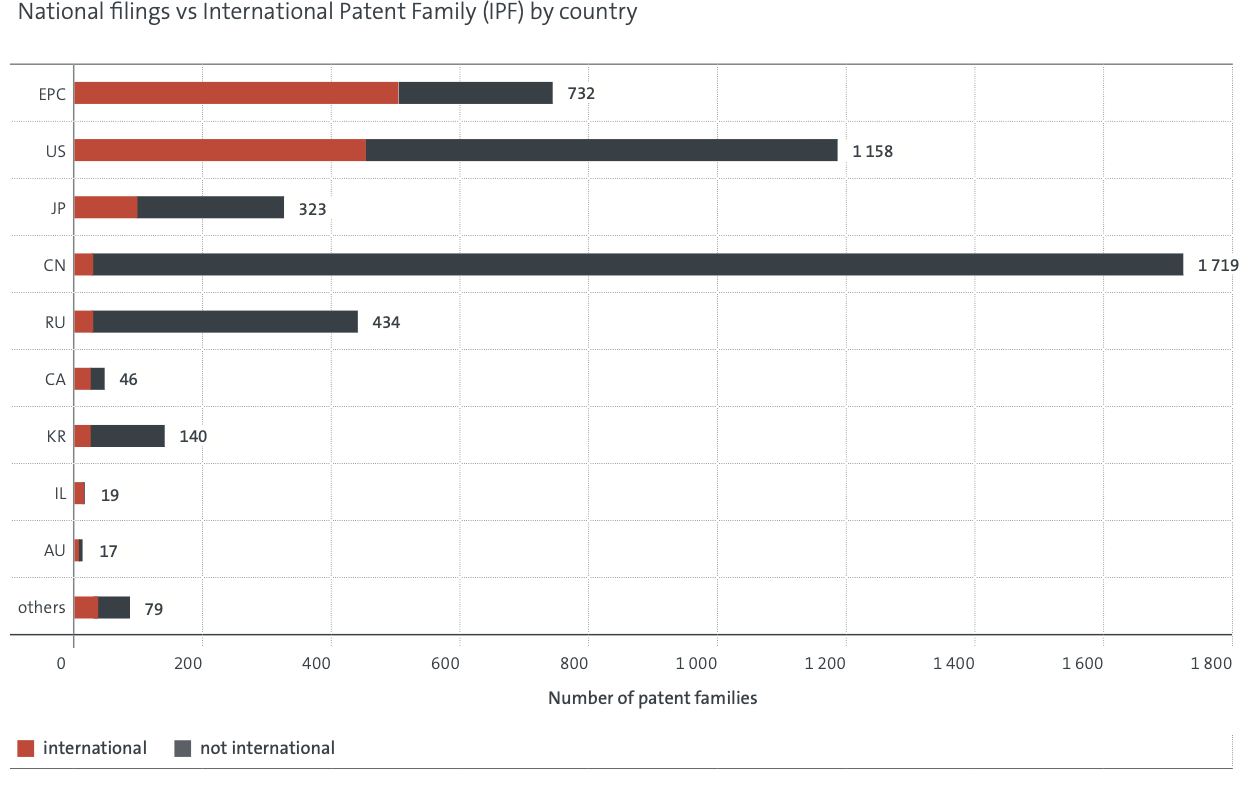
However, the shares of international patent families filed in several countries are 43% for the United States, 17% for Germany, 11% for France, 6% for China, 6% for South Korea, and 5% for Japan. China’s explosive growth in filings is therefore largely confined to its domestic market.
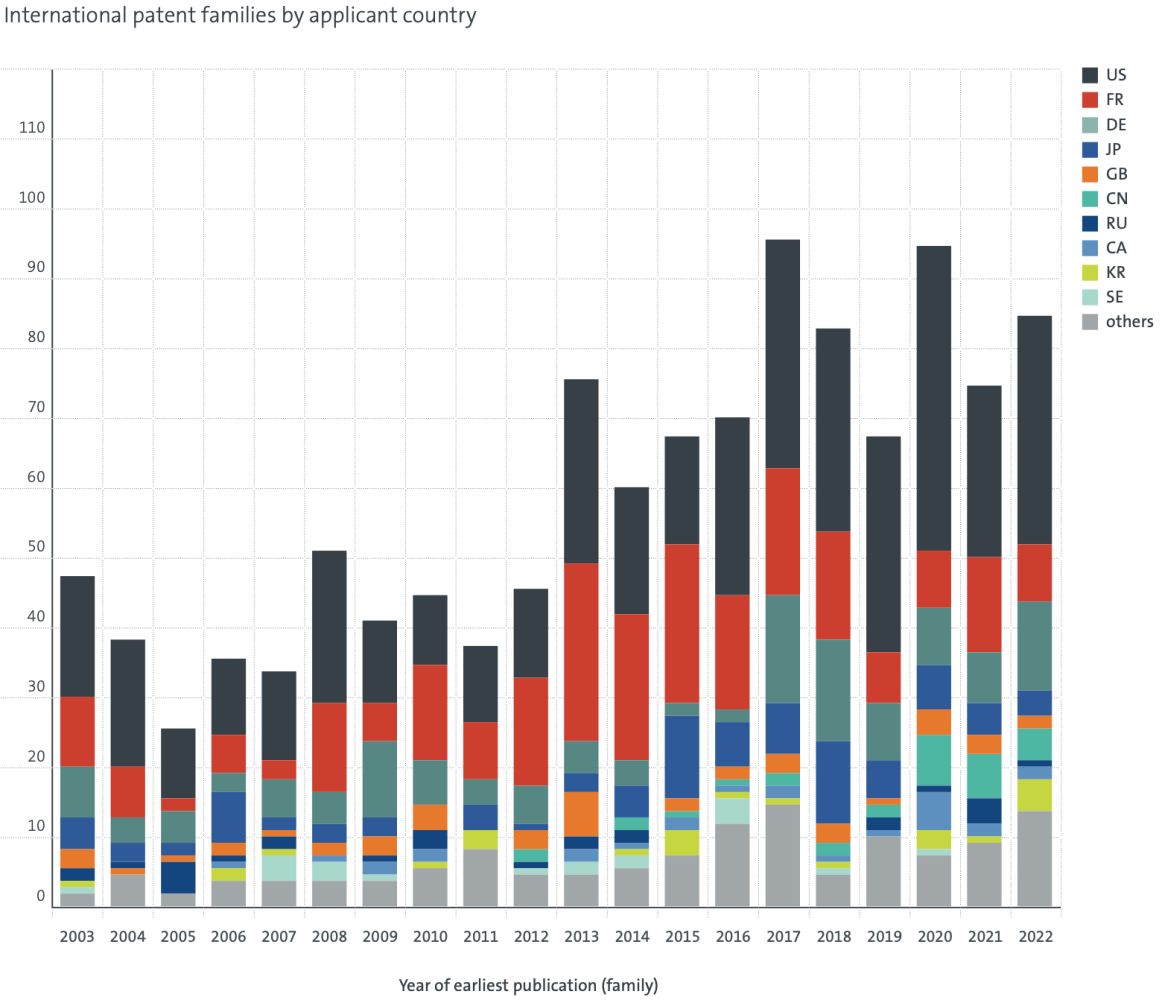
Patent citations make the difference clearer. The United States is by far the leading technology contributor whose patents are cited in other countries, followed by France, Japan, Germany, and Canada. Citations to Chinese patents are concentrated among domestic applicants, with cross-border citations still minimal. China leads in volume, but the spread of technological influence remains centered on the United States and Europe.
The applicants also reveal each country’s industrial structure:
⚡ The technological landscape
The main space-propulsion technologies fall into three broad groups: chemical, electric, and nuclear propulsion.
Chemical propulsion, including liquid, solid, and hybrid systems, was long the default for space propulsion. Representative fuels and oxidizers for liquid systems include liquid hydrogen (LH2), liquid oxygen (LOX), and hydrazine (N2H4). Solid propulsion generally uses a solid mixture of self-combusting fuel and oxidizer, primarily in boosters or main propulsion units for launch systems.
The landscape has recently started changing. In international filings, electric propulsion overtook chemical propulsion during the 2013–2017 period. Electric-propulsion patents grew by an average of 10% annually over twenty years, and Chinese applicants accounted for 67% of patents in this field in 2022.
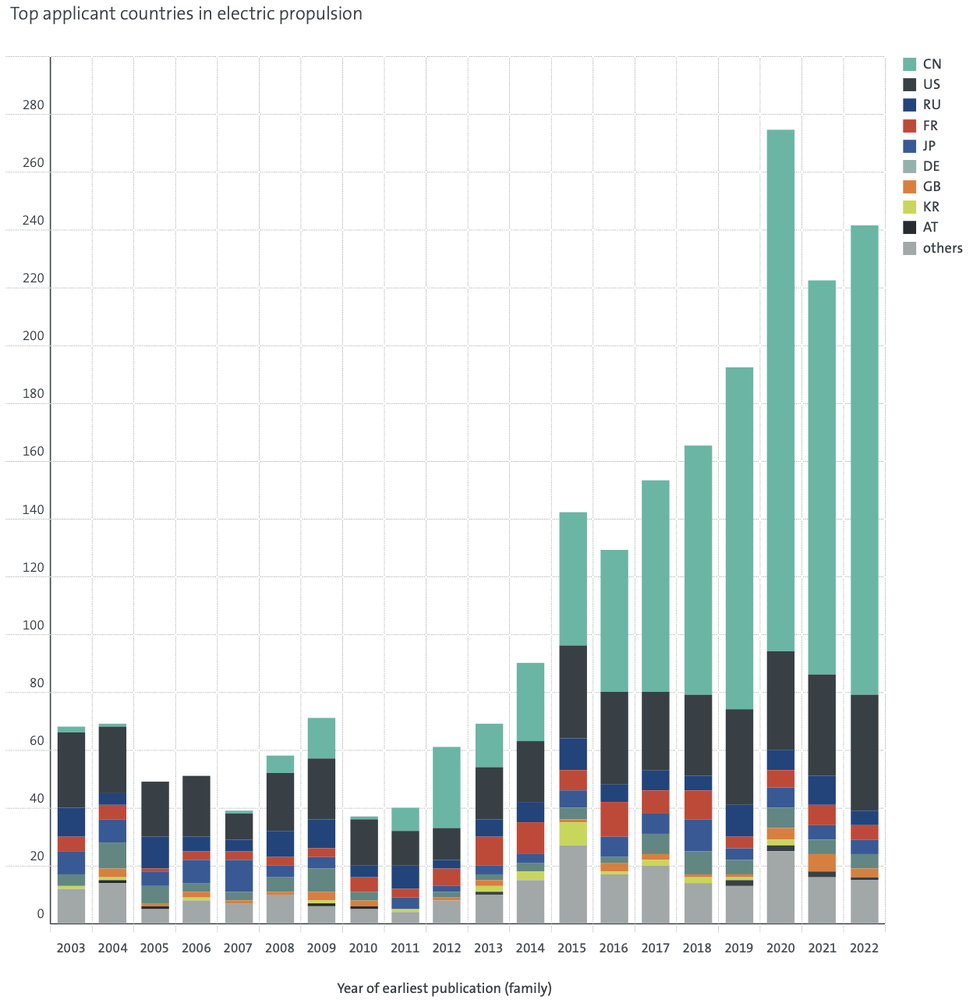
Advances in solar cells are a key factor. The specific power of satellite solar cells increased more than threefold over the past 25 years, from 30 W/kg to 100 W/kg, substantially improving the practicality of electric propulsion.
There is another interesting point. Chemical-propulsion filings are rising almost in parallel with launch numbers, but recently have notably failed to match market growth. This is because SpaceX, the largest player, responsible for 43% of all launches in 2023, files almost no patents on launch-vehicle technology. It appears to prefer trade secrets and execution speed over protection through patent disclosure. This is a reminder that patent data does not reveal the whole industry.
Nuclear propulsion is drawing attention as the third contender. Although absolute numbers remain small, it is seen as a new battleground amid lunar-exploration competition between the US-led Artemis group and the China-led International Lunar Research Station (ILRS) group.
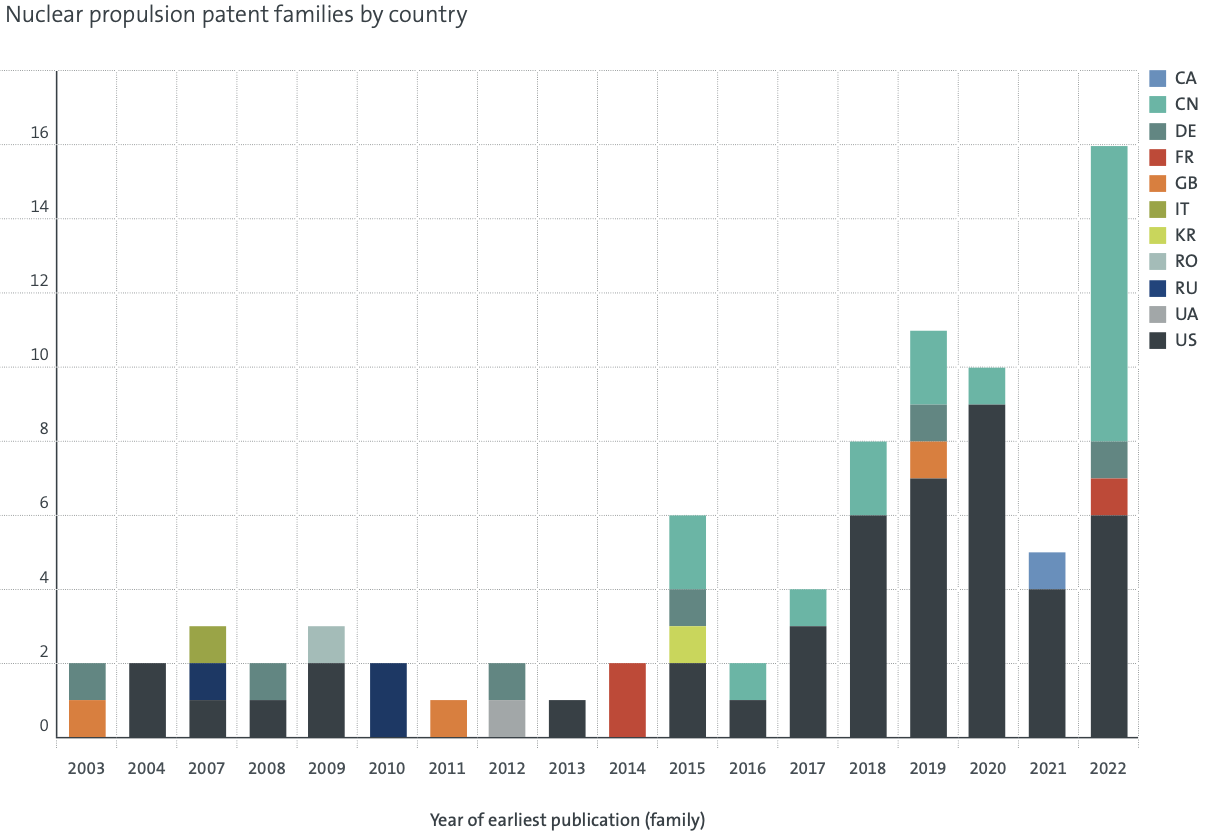
The United States has long led nuclear propulsion, but China’s filings overtook it for the first time in 2022. It is also striking that Russian filings have effectively stopped since 2010 despite the country’s deep legacy in this field.
🛰️ Orbits are finite
Let us change perspective. Huge satellite constellations are now being deployed, including Starlink, with approximately 42,000 planned satellites, China’s Guowang, with around 13,000, and G60, with around 12,000. Starlink recently caused controversy by requesting US Federal Communications Commission authorization for one million satellites.
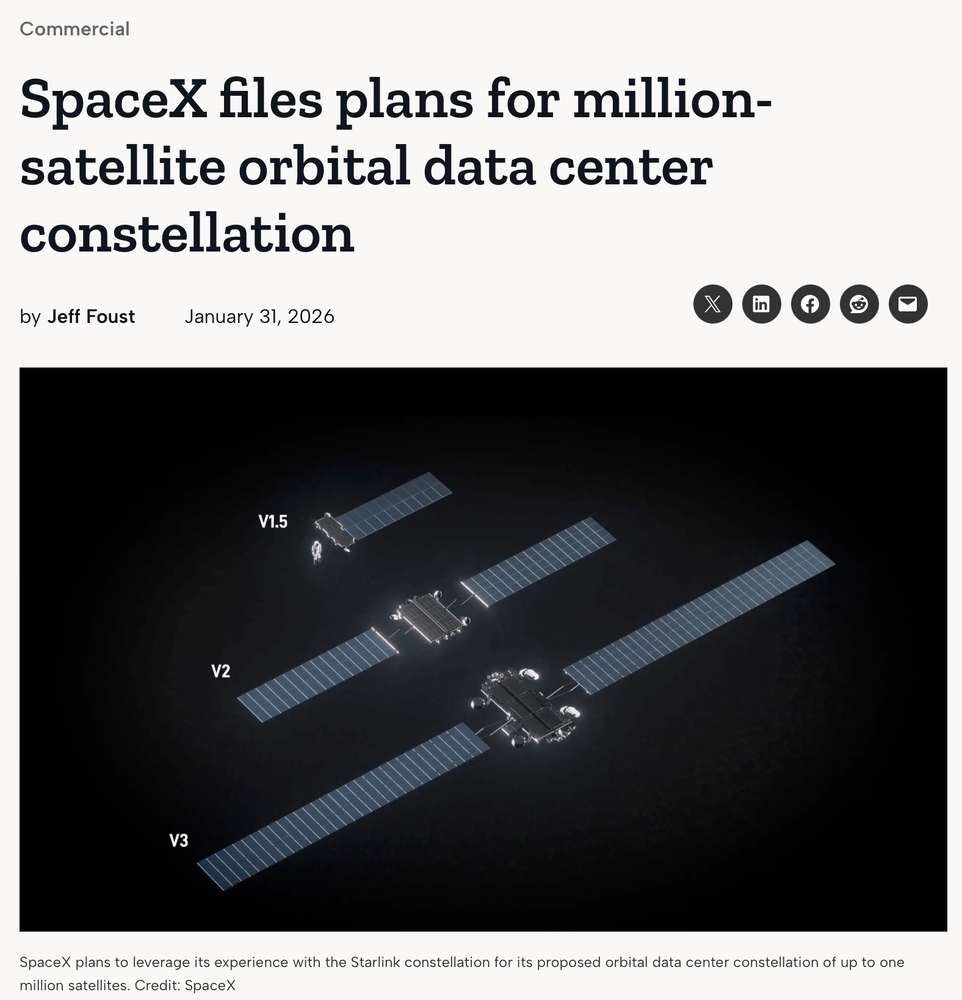
Orbital congestion increases collision risk exponentially. The key response is ultimately satellites’ own maneuvering ability: their propulsion systems. Recent propulsion patents are therefore expanding beyond traveling farther into moving safely and precisely, including station-keeping, deorbiting, and collision avoidance.
New technologies are consequently increasing, including atmosphere-breathing electric propulsion (ABEP), which generates thrust in very low Earth orbit by taking in surrounding atmosphere rather than carrying propellant, and beamed-energy propulsion, which changes orbits using lasers on the ground or in orbit.
🧭 Closing thoughts
Space propulsion brings Mars and beyond to mind. Follow the patent data, however, and the real competition is much closer: low Earth orbit, surrounding our planet.
The 1967 Outer Space Treaty firmly prohibited any country from claiming sovereignty over the Moon or other celestial bodies. Ownership of distant places was thus banned early on. Low-Earth orbital positions and frequencies, by contrast, are coordinated through the International Telecommunication Union (ITU), generally under a system that gives priority to the first applicant.
In that sense, today’s low Earth orbit evokes the Age of Exploration or the settlement of the American West. Those with capital and technology plant their flags first and secure the best positions.
Orbit is a finite resource: usable altitudes and orbital planes are limited. The advantages of getting there first are considerable. Later entrants are pushed into less favorable altitudes for latency and power efficiency and must also shoulder the burden of collision-avoidance maneuvers. As constellations grow, their coverage and service quality improve, making an established gap difficult to close.
Securing orbital positions first therefore goes beyond merely taking a place. It creates a structure that continually increases costs for later entrants.
These days, astronomers reportedly worry about satellite trails streaking across photographs of the night sky. To some, these are welcome lights that connect communications; to others, they are obstacles to observation. Such different ways of seeing the same sky have emerged in just the past few years.
Next time you look up at the night sky, you might remember that it is much more crowded up there than it seems — and consider which technologies are now competing for those crowded spaces.
#BetweenTechAndRules #SpacePatents #SpacePropulsion #ElectricPropulsion #SpaceDebris #SpaceTrafficManagement #IPStrategy #EPO