
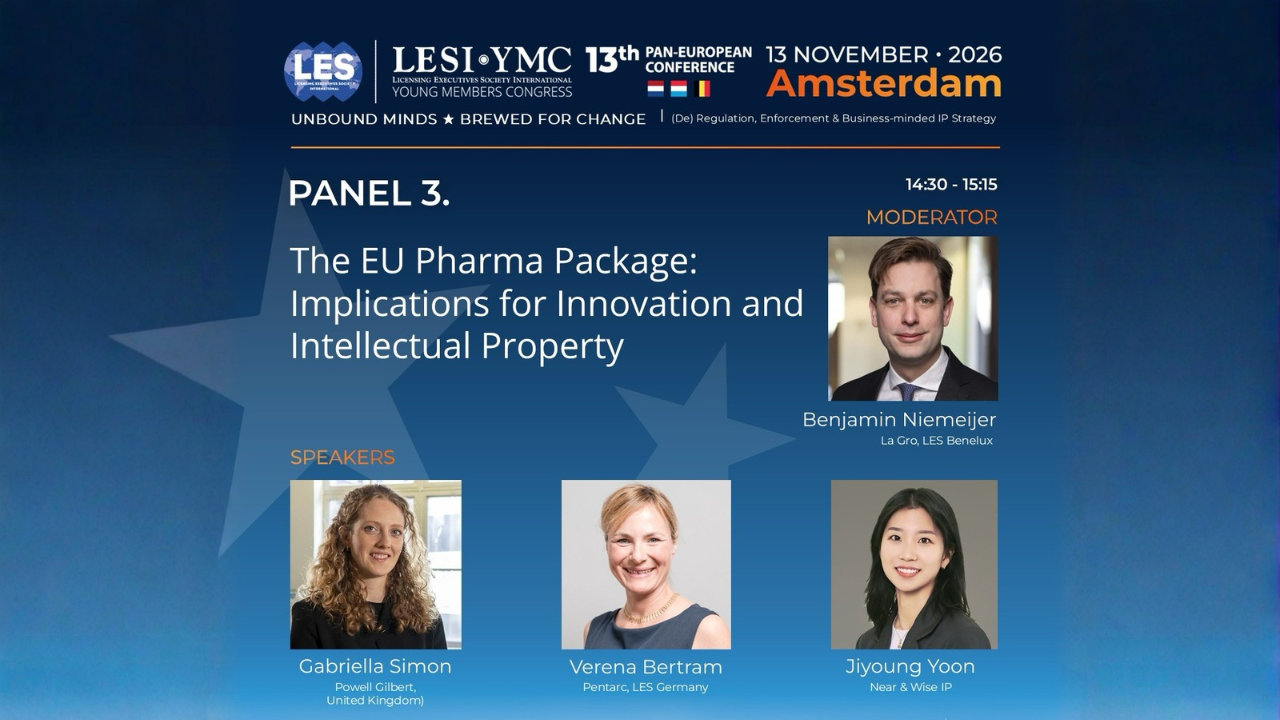
The EU is overhauling its pharmaceutical legislation for the first time in more than 20 years. Because the reform replaces two pieces of legislation as a single package, it has been named the “EU Pharma Package.”
The EU Pharma Package has been the hottest pharmaceutical issue in Europe for three years, yet it has attracted little attention in Korea—even though its impact on Korean companies is far from small.
This week is a preview. On Friday, November 13, I will take part in a panel on this legislation at the LESI YMC Pan-European Conference in Amsterdam. Sitting alongside experts from the Netherlands, Germany and the United Kingdom, I plan to discuss how this legislation looks from outside the EU.
💊 What is the EU Pharma Package?
The framework of the EU’s current pharmaceutical legislation has seen no major revision since it was established in 2004. In 2023, the Commission presented a comprehensive reform proposal. After nearly three years of negotiations, the Council adopted its position this September. A European Parliament vote is scheduled for the end of this month, with actual application expected around the end of 2028.

The legislation has two broad goals: to give developers of new medicines a reason to keep developing them, and to make medicines available to patients sooner, at lower prices, and in smaller countries too. Three key changes are outlined below.
🇰🇷 Points to watch from Korea
What should Korean companies—and, more broadly, companies based outside the EU—pay attention to?

There are two main routes by which companies outside the EU enter the European market. The key considerations differ according to the route taken.
In short, opportunities and burdens have arisen together. In next week’s full article, I will discuss what Korean companies should prepare in advance as a result.
🙋♀️ One question before I go
A pharmaceutical company wants to launch a generic on the very day the patent expires. This is called a Day-1 Launch. Which is better placed: a company with a factory inside the EU or one with a factory in Korea?

The closer company might seem to have the advantage, but until now the answer has been the opposite. This reform also affects that issue.
Next week, I will return with the full article, combining my presentation with what I hear at the conference.
If you are attending the LESI YMC Pan-European Conference in Amsterdam, I look forward to seeing you on Friday, November 13.