
I concluded the previous article by noting that rules always lag one step behind technology. Some businesses, however, do not simply wait through that gap. They move ahead before rules are established and claim the empty space as a business opportunity.
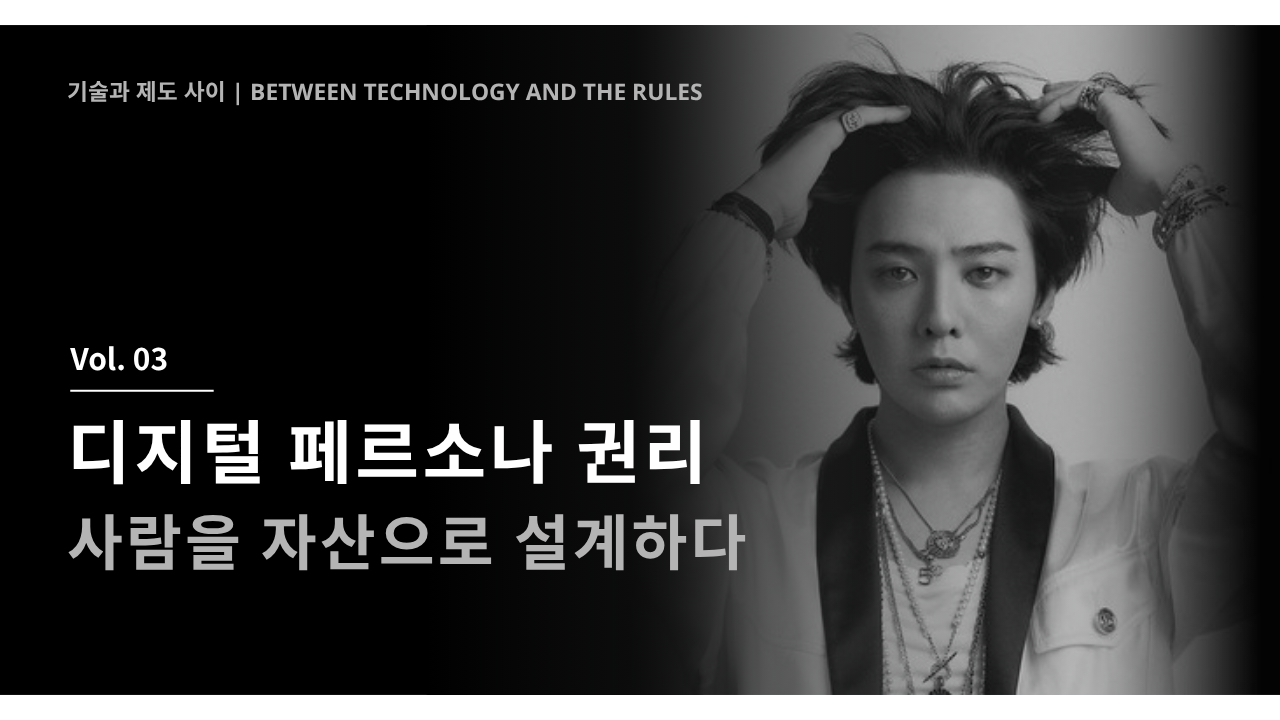
Galaxy Corporation, the startup joined by G-Dragon, is one such business. Founded in 2019 with capital of KRW 1 million, it became a unicorn valued at KRW 1 trillion by the end of 2025. G-Dragon accounts for 75–80% of its approximately KRW 298.9 billion in revenue last year. It may look dependent on a single artist, but its real vision is how to turn people into digital assets. Will this company become a target of future regulation, or a pioneering example that helps set its standards?
🧬 Designing an existence rather than a work
Traditionally, entertainers were tied to individual works such as particular performances, albums, or videos. Their value was realized only through those works.
Galaxy Corporation takes a different approach. It designs an entertainer as an expandable digital existence, combining activity data, voice and appearance records, and performance style, rather than as a one-off performer or an individual content IP.
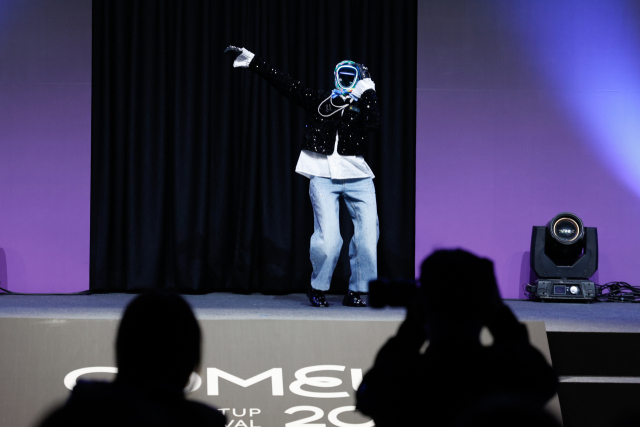
At the COMEUP 2025 startup event in December 2025, the company presented a humanoid robot performing the choreography of G-Dragon’s new song POWER. It announced plans with KAIST for the official debut of the world’s first robot idol.
Human artists perform, virtual idols appear onstage — for example, in Netflix’s KPop Demon Hunters — and now AI-integrated robot idols take things further. CEO Choi Yong-ho envisions a world in which real, virtual, and robot idols coexist.
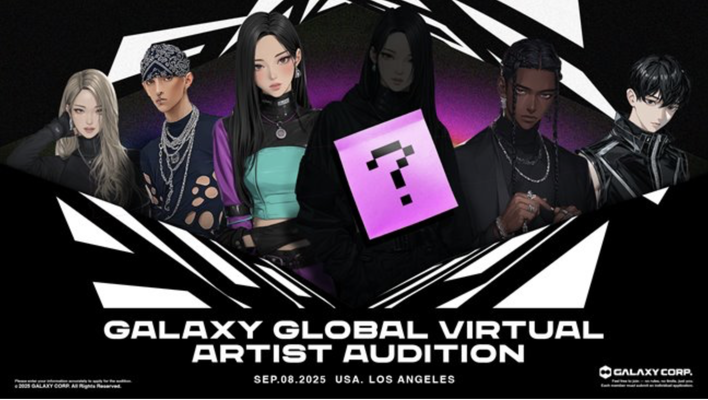
The same idea has changed how newcomers are recruited. At the 2025 Global Virtual Artist Audition, held in Seoul after Los Angeles and Osaka, applicants performed as virtual avatars rather than showing their real faces. They were assessed solely on musical ability and digital personality, not appearance or gender. Of around 1,000 applicants, eighty reached the main round. Those selected are reborn with their own AI digital identity — an avatar. The debuting entity is effectively a digital persona rather than a human being.
In a similar example, at a technology exhibition in Paris in June 2026, the company’s humanoid appeared onstage wearing clothing generated by AI trained on the designs of the late André Kim.
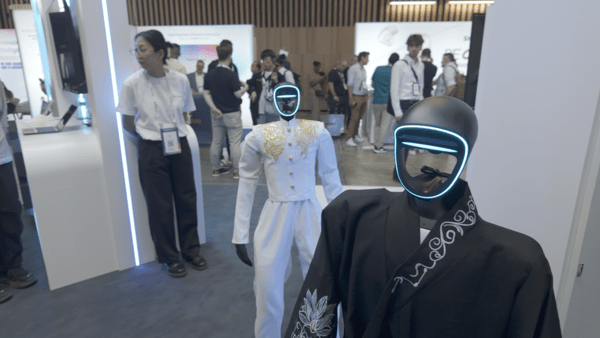
Galaxy Corporation’s core assets are therefore no longer works. They are the elements of personal identity themselves: voice, face, manner of speaking, and movement. If copyright protects works, we also need to discuss rights concerning the person reproduced in algorithmic space. The concept used to address this is digital persona rights.
⚖️ What are digital persona rights?
What exactly does that mean? First, this is an emerging concept not yet written into any country’s statute book under this name. Its core is that the protected object is not a work but a person’s identity and authenticity themselves. When someone’s voice, face, or speaking style is reproduced in algorithmic space, that person should be able to control the representation.
Digital persona rights are described through three pillars.
Digital persona rights are often compared with the existing right of publicity. The latter establishes an individual’s right to commercially exploit identifying elements such as their name and likeness. While publicity rights are a property-centered concept concerning commercial use of identity markers, digital persona rights can be understood as a broader framework encompassing training data, algorithmic profiles, and virtual counterparts.
⚖️ Current South Korean law — beyond publicity rights
How far has South Korean law progressed on digital persona rights? We can begin by examining how it has treated publicity rights.
Following the Supreme Court’s recognition of unauthorized production of a BTS photobook as unfair competition in 2020 (Supreme Court order of March 26, 2020, 2019Ma6525), the Unfair Competition Prevention Act was amended in 2021. A new provision prohibited unauthorized commercial use of another person’s widely recognized, economically valuable identifying markers in South Korea, including their name, likeness, voice, and signature[1]. This was the country’s first explicit statutory basis for publicity rights.
[1] Unfair Competition Prevention Act, Article 2(1)(ta) — amended December 7, 2021, effective 2022. It defines unauthorized commercial use of another person’s name, likeness, voice, signature, or other identifying markers widely recognized in South Korea and possessing economic value as unfair competition. Civil and administrative remedies include injunctions, damages, and corrective recommendations; there are no criminal penalties.
However, the provision protects specifically against unauthorized use of identifying markers of famous people. It does not address protection for ordinary people, transferability of the right, duration, or who inherits rights after death. It also leaves aside the central AI-era questions of training data, algorithmic profiles, and virtual avatars. That is why a new concept of digital persona rights is needed beyond publicity rights.
Efforts are ongoing. Since late 2022, the Ministry of Justice has pursued a Civil Act amendment creating a right to commercially exploit personality markers[2]. This would apply to everyone, not just celebrities; be nontransferable but licensable; and, crucially, be inherited and survive for thirty years after death. The amendment, however, lapsed with the end of the parliamentary term and has not been reintroduced.
[2] Civil Act amendment introducing a right to commercially exploit personality markers — announced by the Ministry of Justice on December 26, 2022. It would recognize every individual’s right to commercially use their name, likeness, voice, and other personality markers, regardless of fame. The right would be nontransferable but licensable, with withdrawal possible for serious reasons contrary to personal convictions, and inheritable for thirty years after death. Similar legislation was introduced by lawmakers in 2025, but had not passed the National Assembly when this article was written.
🧭 Closing thoughts
The previous article emphasized that rules always lag behind technology. This one has examined how a company fills the gap before rules exist. Rather than waiting for law to draw boundaries, the market moves first. Perhaps this offers a preview of what lawful deepfakes could look like.
I remember publicity rights occupying barely a page as a peripheral topic when preparing for the patent attorney examination. With generative AI, they have become a central issue we cannot avoid. I look forward to seeing whether Galaxy Corporation’s activities become established market practice or whether the law arrives with a different answer.
#BetweenRulesAndTech #DigitalPersona #PublicityRights #GalaxyCorporation #GenerativeAI #IP